Choosing the Right Spot Welder for Aluminum: A Complete Guide for Manufacturers
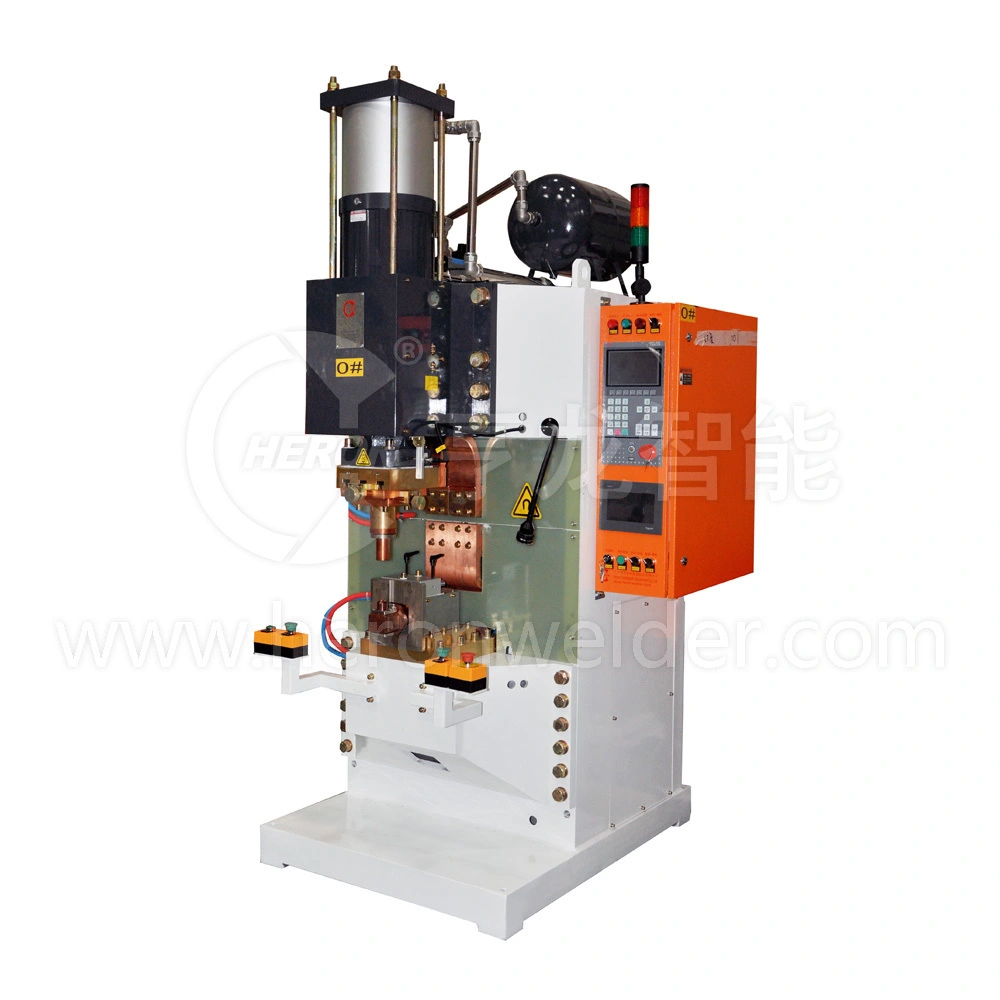
Aluminum’s lightweight strength and corrosion resistance make it a cornerstone material in automotive, aerospace, electronics, and industrial manufacturing. However, joining aluminum effectively presents unique challenges due to its high thermal conductivity and oxide layer formation. For manufacturing engineers, OEMs, and automation integrators, selecting the right spot welder for aluminum is critical for achieving strong, consistent, and cost-effective welds.
At Heron Welder ,we specialize in advanced resistance welding solutions, including spot welders optimized for aluminum, along with integrated welding guns, controllers, and fully automated production lines designed for precision, reliability, and efficiency.
Understanding Spot Welding for Aluminum
What is Spot Welding?
Spot welding is a type of resistance welding where two metal sheets are joined by applying pressure and passing an electric current through the contact points. The resistance of the metals generates heat, which melts and fuses the materials at precise spots.
For aluminum, this process requires special consideration:
-
High Thermal Conductivity: Aluminum dissipates heat faster than steel, requiring higher current and shorter weld times.
-
Oxide Layer: Aluminum naturally forms a hard oxide layer that increases resistance and can impede consistent weld formation.
-
Soft Metal Behavior: Aluminum deforms easily, so electrode pressure and cooling must be carefully controlled.
Spot Welding Principles for Aluminum
-
Current Density: Must be carefully calibrated; too low and the weld won’t form, too high and the material may burn through.
-
Electrode Design: Copper or copper-alloy electrodes with optimal tip shapes improve heat transfer and weld quality.
-
Weld Time & Force: Short pulses under precise electrode force prevent material deformation while ensuring strong joints.
-
Surface Preparation: Cleaning or chemical treatments can reduce oxide interference and improve weld consistency.
Key Applications of Aluminum Spot Welding
Aluminum spot welding is widely used across industries that demand lightweight, durable assemblies:
-
Automotive: Battery packs, body panels, and chassis components.
-
Aerospace: Lightweight structural panels, brackets, and fuselage components.
-
Electronics & Appliances: Aluminum casings, heat sinks, and housings.
-
Industrial Fabrication: Metal furniture, HVAC components, and industrial frames.
Using a high-quality spot welder for aluminum ensures reliable performance in high-volume production, minimizing rework and scrap rates.
Choosing the Right Spot Welder: Key Considerations
1. Machine Type
Heron offers several resistance welding machines suitable for aluminum, including:
-
Capacitor Discharge Spot Welders: Ideal for thin sheets or delicate components.
-
MFDC Spot Welders: Provide precise control for high-speed automotive and aerospace applications.
-
Conventional AC Welders: Effective for thicker aluminum panels in industrial applications.
2. Electrode Material and Shape
-
Copper or copper-chrome alloys provide excellent conductivity and durability.
-
Proper tip geometry ensures consistent heat distribution.
-
Rotating or replaceable tips reduce downtime in high-volume production.
3. Automation Integration
-
Spot welding aluminum in automated lines improves cycle time, repeatability, and safety.
-
Robotic welding guns with synchronized controllers are essential for automotive and aerospace assembly.
-
Heron’s controllers support real-time monitoring of current, voltage, and weld quality for optimized output.
Aluminum vs. Steel Spot Welding: What’s Different?
| Feature | Aluminum | Steel |
|---|---|---|
| Thermal Conductivity | Very high – heat dissipates fast | Moderate – easier heat retention |
| Oxide Layer | Hard, requires cleaning | Minimal impact |
| Electrode Life | Shorter, needs advanced alloys | Longer with standard copper |
| Weld Parameters | Higher current, shorter time | Standard current and time |
| Material Deformation | Higher risk | Lower risk |
Understanding these differences ensures proper process design, reduces defects, and maximizes productivity.
Best Practices for Spot Welding Aluminum
-
Pre-clean Surfaces – Remove oxides and contaminants for consistent weld formation.
-
Select the Correct Electrode – Copper-chrome or other specialized alloys extend electrode life.
-
Optimize Weld Parameters – Test and calibrate current, force, and weld time for your specific sheet thickness.
-
Monitor Quality – Use real-time sensors and controllers to ensure joint integrity.
-
Implement Automation – Robotic systems reduce human error and increase throughput for repetitive tasks.
Why Choose Heron Spot Welders for Aluminum?
At Heron Welder, we combine engineering expertise with industrial-grade equipment to solve aluminum joining challenges. Our solutions offer:
-
Advanced MFDC & Capacitor Discharge Technology – Achieve precise, repeatable welds for complex aluminum assemblies.
-
Custom Welding Guns & Controllers – Optimized for electrode life, force control, and weld quality monitoring.
-
Integrated Automation Lines – Fully automated spot welding solutions for automotive, aerospace, and industrial OEMs.
-
Global Support & Expertise – Engineering consultation, installation, and after-sales service worldwide.
FAQs About Spot Welding Aluminum
1. Can I use a standard steel spot welder on aluminum?
No. Aluminum’s high thermal conductivity and oxide layer require specialized electrodes and higher current control. Using standard steel welders often leads to weak or inconsistent welds.
2. What thickness of aluminum can be spot welded?
With the right MFDC or capacitor discharge welder, aluminum sheets from 0.5 mm to 5 mm can be reliably welded.
3. How do I extend electrode life when welding aluminum?
Use copper-chrome or copper-tungsten electrodes, optimize weld parameters, and maintain proper cooling cycles.
4. Is robotic automation necessary for aluminum spot welding?
For high-volume production, robotic automation ensures repeatable weld quality, reduces cycle time, and minimizes human error.
5. Can Heron customize spot welding solutions for unique aluminum assemblies?
Yes. Heron provides tailored solutions, from specialized welding guns to complete automated production lines, designed for your material and process requirements.
Conclusion: Optimize Your Aluminum Welding with Heron
Selecting the right spot welder for aluminum is critical for production efficiency, weld quality, and product reliability. From MFDC spot welders to capacitor discharge machines and fully automated lines, Heron Welder delivers precise, industrial-grade solutions that empower manufacturers, OEMs, and integrators to tackle even the most demanding aluminum welding applications.
Ready to upgrade your aluminum welding process? Contact Heron today to request a quote or consult with our experts for customized spot welding and automation solutions.
Kategorien
Mehr lesen
The immense Car E Hailing Market Size is a powerful testament to the technology's profound and rapid impact on global mobility. The market is most accurately measured not just by its multi-billion-dollar revenue figures but also by its staggering user base, which numbers in the hundreds of millions, and the billions of rides completed annually. This immense scale demonstrates that car...

Regional Overview of Executive Summary Steroid Injections Market by Size and Share CAGR Value Data Bridge Market Research analyses that the global steroid injections market, valued at USD 4.87 Billion in 2022, is expected to reach USD 8.17 Billion by 2030, growing at a CAGR of 6.70% during the forecast period of 2023 to 2030. A consistent market research report like Steroid Injections...

MarkNtel Advisors, a leading market research and consulting firm, has announced the release of its latest study titled Cellular Router and Gateway Market Research Report: Forecast (2024-2030). This report provides a detailed assessment of the Cellular Router and Gateway Market, covering its evolving dynamics, emerging trends, key growth drivers, major challenges, and competitive...

IntroductionThe US Automotive Collision Avoidance System Market is revolutionizing road safety by integrating intelligent technologies that detect and prevent potential crashes before they occur. As vehicle automation and advanced driver assistance systems (ADAS) evolve, collision avoidance systems have become a standard in modern automobiles. These systems use radar, camera, ultrasonic, and...

As healthcare infrastructure expands, automation becomes a strategic priority for institutions seeking accuracy and operational excellence. Many hospitals continue to transition from manual repackaging methods to fully automated or semi-automated systems, as the reduction in human error translates to significant cost savings and improved patient outcomes. Furthermore, regulatory bodies...