How Much Does Attic Insulation Cost
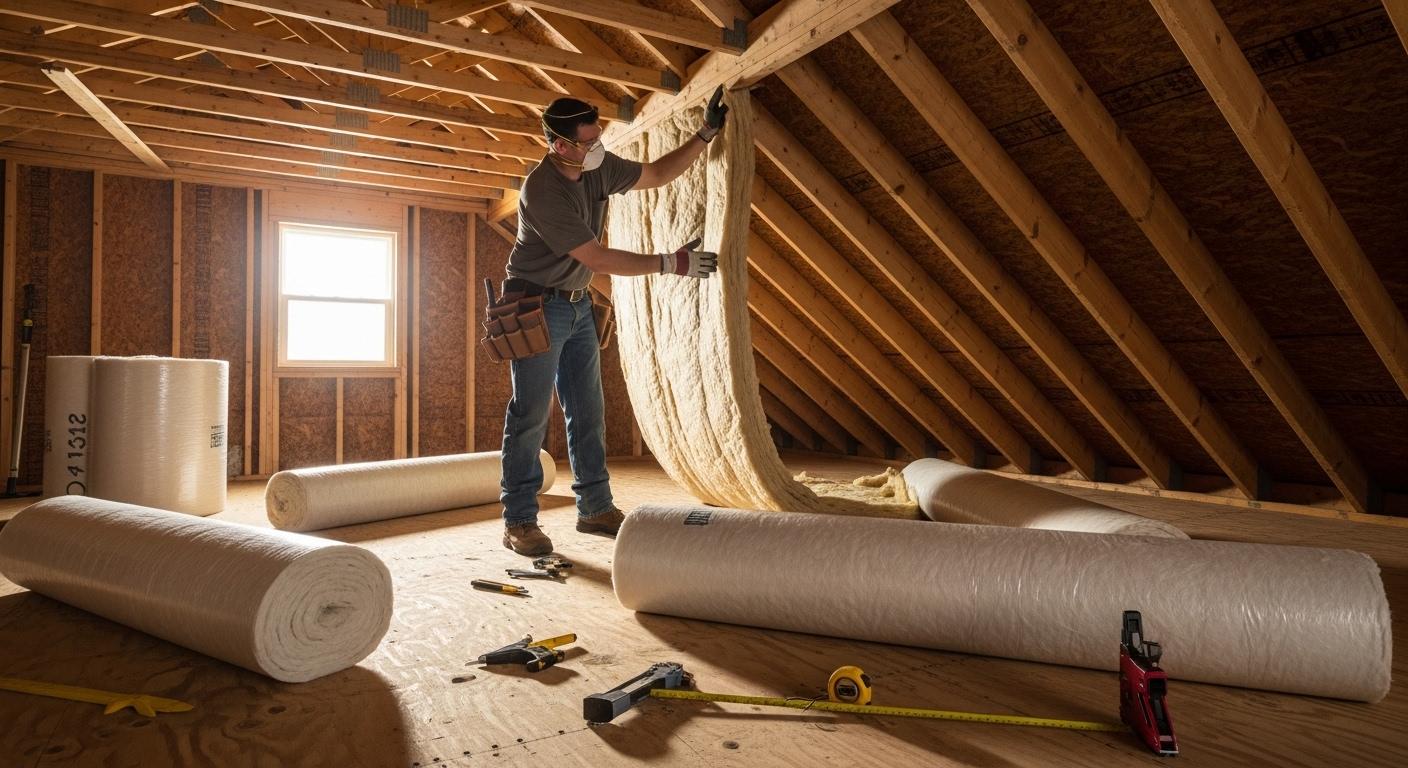
In the U.S., insulating an attic typically costs between $1,500 and $3,000 for a standard home. That is, if we take into account the size of the attic, the type of insulation used, and the work involved. Expensive renovations with top-notch materials may go over $5,000, whereas small DIY tasks can be as cheap as $500. The benefits of insulating the attic properly include significantly lowering the heating and cooling bills, making the home more comfortable, and raising the market value.
Why You Should Care About Attic Insulation
Attic insulation is essential for energy-saving and comfort purposes in the homes of the U.S. Heat naturally tends to rise, and if the attic is not insulated, the warm air will leak out in winter, and the cool air will get out in summer. This kind of off-target energy use can cause the energy bills to go up, the rooms to be less comfortable, and the electrical heating/cooling units to be overworked. Homeowners who put in attic insulation not only get to keep their money but also bring their houses into better compliance with environmental requirements.
Quite often, homeowners request professionals to give them a quote before they make the decision to insulate their homes. Using expert estimating services can help evaluate the attic’s current insulation, calculate material requirements, and provide a realistic cost breakdown tailored to your home’s size and condition. This allows homeowners to be fully informed and to set aside a feasible amount of money for the project.
Factors That Influence Your Attic Insulation Cost
Size Of The Attic And How Easy It Is To Get There
The area of the attic is the main factor that determines how much it will cost to insulate it. The bigger the attic, the more the materials and hence the work that needs to be done will be, therefore the expenses will be higher. Besides that, if an attic is difficult to enter or has odd-shaped spaces, the work might be even more specialized, which will also increase the cost.
Type Of Insulation
Price, efficiency, and installation methods differ among the different types of insulation materials. Some of the options that are most common options in homes in the U.S. are fiberglass batts, blown-in cellulose, spray foam, and rigid foam panels. Each material has its own price per square foot and also offers different advantages.
R-Value
The term R-value is a measure of insulation's capability to resist heat flow. Thus, materials with higher R-values deliver greater energy savings, but they are also more expensive. Besides that, the existing building codes and the climate of the area also determine the R-value recommendation, such that it will be necessary to get advice from a professional before acquiring the insulating materials.
Labor And Professional Installation
Professional installations will provide the right coverage and will follow the safety rules. Labor costs are impacted by various factors such as location, complexity of the installation, and the skill level of the installer. Doing it yourself is less expensive but might result in less efficiency if not done properly.
Additional Factors
Besides that, other issues like air sealing, roof ventilation changes, installing moisture barriers, and attic repairs before the insulation can all increase the labor and material costs and also affect the insulation's efficiency in the long run.
Types Of Attic Insulation And Their Costs
Below are some of the most common types of attic insulation in the U.S., together with their average cost ranges and normal lifespan:
|
Insulation Type |
Cost per Sq. Ft. (Installed) |
Typical Lifespan |
Pros |
Cons |
|
Fiberglass Batts |
$0.50 – $1.50 |
20–30 years |
Affordable, easy to install |
Can leave gaps if not installed properly |
|
Blown-in Cellulose |
$0.45 – $0.60 |
~20 years |
Good for irregular spaces, eco-friendly |
Settles over time, may need topping up |
|
Spray Foam (Open Cell) |
$1.50 – $3.50 |
25+ years |
Excellent air sealing, high R-value |
Expensive, professional installation required |
|
Spray Foam (Closed Cell) |
$3.00 – $7.00 |
25+ years |
High R-value, moisture barrier |
Very high cost, can be overkill for some homes |
|
Rigid Foam Panels |
$4.00 – $15.00 |
25+ years |
Durable, water-resistant |
Expensive, installation can be tricky |
How To Plan For Your Attic Insulation Project
Step 1: Inspect Your Attic
Firstly, you should check the attic for any damage, mold or dampness before you put the insulation in. If there are any repairs required, the repairs should be carried out first so that the insulation can work efficiently.
Step 2: Choose The Right Insulation
Consider local climate, your energy efficiency goals, and budget. Fiberglass is the most common due to its low price, spray foam provides excellent air sealing, and blown-in cellulose is great for older homes with uneven joists.
Step 3: Calculate Material Needs
Accurate calculations help to minimize waste and keep costs under control. This is where a professional estimating service may come in handy. They examine the attic, determine the required materials, and provide a detailed estimate.
Step 4: Installation
Certified professionals can complete the project quickly and efficiently, guaranteeing thorough coverage and the right R-value. DIY installations can be made for materials such as fiberglass or cellulose; however, in that case, one has to be very careful with both safety and coverage.
Step 5: Post-Installation Inspection
Look for any missing or uneven areas in the insulation after it has been laid. Ensure that the ventilation and air sealing are done correctly so that you get the most out of your energy.
Benefits Of Proper Attic Insulation
-
Energy Savings: Good insulation can cut heating and air conditioning costs by 10 30% each year.
-
Comfort: It keeps your home temperature steady all year long.
-
Home Value: Homes that are energy efficient fly off the market faster.
-
Noise Reduction: Besides making your home more energy efficient, insulation is also a great way to block noise.
-
Environmental Impact: When you use less energy, you produce fewer greenhouse gases.
Conclusion
Attic insulation is one of the best ways by which homeowners in the U.S. can reduce energy bills, elevate home comfort, and increase their property value. Whether it is a DIY project of $500 or a high-end installation exceeding $10,000, the costs depend on the size of the attic, the materials used, the labor, and the R-value requirements.
Using professional estimating services helps the homeowner to be aware of the costs and the materials required, thus avoiding unforeseen expenses and ensuring proper installation. A well-insulated attic, the right guidance from reliable insulation estimation professionals, and good planning will most definitely result in a very efficient and cost-saving part of the home for a long time.
FAQs
1. How Do I Know Which Insulation Is Best For My Attic?
Consider climate, attic shape, budget, and energy efficiency goals. Professional advice is recommended for accurate selection.
2. How Long Does Attic Insulation Last?
Fiberglass: 20–30 years, cellulose: ~20 years, spray foam: 25+ years. Proper installation and maintenance can extend the lifespan.
3. Can I Install Attic Insulation Myself?
Yes, especially fiberglass batts or blown-in cellulose. However, proper coverage and safety precautions are crucial.
4. Will Insulation Pay For Itself?
Yes, energy savings often offset costs within 3–7 years, depending on insulation type and energy usage.
5. How Does R-Value Affect Cost?
Higher R-value materials provide better insulation but increase material costs. Local building codes and climate should guide R-value selection.
Categorii
Citeste mai mult
"Latest Insights on Executive Summary Alcoholic Tea Market Share and Size CAGR Value The global alcoholic tea market size was valued at USD 1.49 billion in 2024 and is projected to reach USD 2.56 billion by 2032, with a CAGR of 7.00 % during the forecast period of 2025 to 2032 The Alcoholic Tea Market report is the best to know the trends and opportunities in Alcoholic Tea Market The...

Executive Summary: Goat Milk Yogurt Market Size and Share by Application & Industry The goat milk yogurt market size is expected to grow at a compound annual rate of 7.10% in the forecast period 2021 to 2028 and is likely to reach USD 4.50 billion by 2028. The rapid rise in the dairy industry is the factor responsible for the growth of goat milk yogurt market in the forecast...
Executive Summary Blood Cancer Market Value, Size, Share and Projections Global blood cancer market size was valued at USD 57.23 billion in 2024 and is projected to reach USD 117.43 billion by 2032, with a CAGR of 9.40% during the forecast period of 2025 to 2032. Being a comprehensive in nature, Blood Cancer Market report undeniably meets the strategic and specific needs of the...
Executive Summary Nanosatellite and Microsatellite Market Size and Share Analysis Report The global nanosatellite and microsatellite market size was valued at USD 3.98 billion in 2024 and is projected to reach USD 16.88 billion by 2032, with a CAGR of 19.80% during the forecast period of 2025 to 2032. Businesses are very much depending on the diverse segments involved in the market...
According to Straits Research, the global newborn screening software market size was valued at USD 1.30 billion in 2024 and is expected to reach USD 2.79 billion by 2033, growing at a CAGR of 8.32% during the forecast period (2025-2033). The study draws from comprehensive primary interviews with industry experts, verified proprietary databases, and...