Powering Progress: The Strategic Evolution of the Global Lighting Contactor Industry

The modern electrical landscape is witnessing a profound shift toward intelligent automation and energy conservation. At the center of this transition is the Lighting Contactor Industry, which provides the essential hardware required to manage high-power lighting loads safely and efficiently. Lighting contactors are specialized electromechanical switches designed to control large banks of lights in commercial, industrial, and municipal environments. Unlike standard switches, these devices are built to withstand the rigorous demands of frequent switching and high inrush currents, acting as the reliable bridge between a digital control signal and a high-voltage electrical circuit.
The Anatomy of Control: Mechanics and Design
To understand the growth of this sector, one must look at the technical differentiation that defines the hardware. Lighting contactors are generally categorized into two main types: electrically held and mechanically held. Electrically held contactors require a continuous flow of electricity to the coil to remain closed. These are widely used in industrial settings due to their simplicity and cost-effectiveness. In contrast, mechanically held contactors utilize a latching mechanism that only requires a brief pulse of energy to change states. This design makes them highly energy-efficient and eliminates the audible "hum" often associated with energized coils, making them the preferred choice for noise-sensitive environments like hospitals, libraries, and high-end residential complexes.
As building codes become more stringent, manufacturers are focusing on modular designs. Modern contactors are increasingly compact, allowing them to be easily mounted on standard DIN rails within electrical panels. This modularity reduces installation time and labor costs, which is a significant factor for contractors and developers looking to streamline large-scale construction projects.
Market Drivers: Smart Cities and Energy Mandates
The primary engine behind the industry's expansion is the global push for sustainability. Governments across the world are introducing regulations that mandate the reduction of energy consumption in public and private buildings. For instance, the transition from traditional high-intensity discharge (HID) lamps to LED technology has necessitated a new generation of contactors that can handle the specific electrical characteristics of LED drivers.
Furthermore, the rise of the "Smart City" concept has transformed lighting contactors from simple switches into data-enabled components. Municipalities are investing heavily in smart street lighting systems that can be dimmed or scheduled remotely to save power during low-traffic hours. By integrating Internet of Things (IoT) sensors, these contactors can now communicate with a central management system, providing real-time feedback on energy usage and alerting maintenance crews to potential failures before they occur. This predictive maintenance capability is a game-changer for infrastructure management, significantly reducing operational costs over the long term.
Sectoral Applications and Regional Growth
The application of lighting contactors spans several critical sectors:
-
Commercial: In office buildings and retail malls, contactors are often paired with occupancy sensors and astronomical timers. This ensures that entire floors are not illuminated when vacant, directly contributing to LEED certification and other green building ratings.
-
Industrial: Manufacturing plants and warehouses require ruggedized contactors that can operate in harsh environments with significant electrical noise. Here, the focus is on durability and the ability to handle massive loads without contact welding.
-
Municipal and Outdoor: This includes stadium lighting and highway illumination. These systems require weatherproof enclosures and high reliability to ensure public safety during nighttime hours.
Geographically, North America and Europe remain dominant due to their advanced industrial infrastructure and proactive adoption of green energy policies. However, the Asia-Pacific region is experiencing the most rapid growth. Massive urbanization projects in China and India are creating an unprecedented demand for new electrical distribution systems. These emerging economies are increasingly leapfrogging older technologies in favor of smart, automated lighting controls, making the region a primary focus for global manufacturers.
Innovations and the Road Ahead
The future of the lighting contactor sector is inextricably linked to the digitalization of power. We are seeing a move toward "smart contactors" that feature integrated communication protocols like Zigbee, DALI, or BACnet. This allows for seamless integration into broader Building Management Systems (BMS), where lighting can be synchronized with HVAC and security protocols.
Another emerging trend is the focus on "circularity" and sustainable manufacturing. Leading companies are now looking at the lifecycle of their products, using recyclable materials and designing components that are easier to repair rather than replace. This shift toward environmental responsibility is not just a marketing strategy but a response to a global consumer base that prioritizes eco-friendly industrial practices.
Despite challenges such as the high initial cost of smart systems and a shortage of skilled labor to install complex digital controls, the industry's outlook is exceptionally positive. As the world moves toward a decentralized and decarbonized energy grid, the lighting contactor will remain a cornerstone of electrical safety and efficiency.
Frequently Asked Questions
Why are lighting contactors necessary for LED systems if LEDs use less power? While LEDs consume less energy than traditional bulbs, they have a very high "inrush current" when first turned on. This sudden spike in power can weld the contacts of a standard switch together. Lighting contactors are specifically rated to handle these momentary surges, ensuring the longevity of both the switch and the lighting fixtures.
Can lighting contactors be controlled by a smartphone? Yes, when integrated into a smart building system or an IoT-enabled panel. Modern contactors can be connected to gateways that allow facility managers to toggle or schedule lighting via mobile apps or web-based dashboards from anywhere in the world.
What is the life expectancy of a typical lighting contactor? The lifespan depends on the frequency of switching and the load being managed. However, most high-quality industrial contactors are rated for millions of mechanical operations. With proper maintenance and use within their specified electrical ratings, they can last for several decades.
More Trending Reports on Energy & Power by Market Research Future
Carbon Credit Validation Verification Certification Market Growth
Portable Conventional Generator Market Growth
Portable Hydrogen Powered Generator Market Growth
Categorías
Read More
Regional Overview of Executive Summary Gene Panel Market by Size and Share The global gene panel market size was valued at USD 2.66 billion in 2024 and is projected to reach USD 4.97 billion by 2032, with a CAGR of 8.10% during the forecast period of 2025 to 2032. With the superior Gene Panel Market report, get knowledge about the industry which explains what market definition,...

In-Depth Study on Executive Summary Polyester Fiber Market Size and Share Data Bridge Market Research analyses that the Global Polyester Fiber Market which was USD 3,361.98 million in 2022, would rocket up to USD 5,545.68 million by 2030, and is expected to undergo a CAGR of 6.2% during the forecast period of 2023 to 2030. As the high quality Polyester Fiber Market survey report...
Key Drivers Impacting Executive Summary L-Theanine Market Size and Share The global L-Theanine market size was valued at USD 60.51 million in 2024 and is expected to reach USD 118.04 million by 2032, at a CAGR of 8.71% during the forecast period. Accomplishment of maximum return on investment (ROI) is one of the most wannabe goals for any industry which...
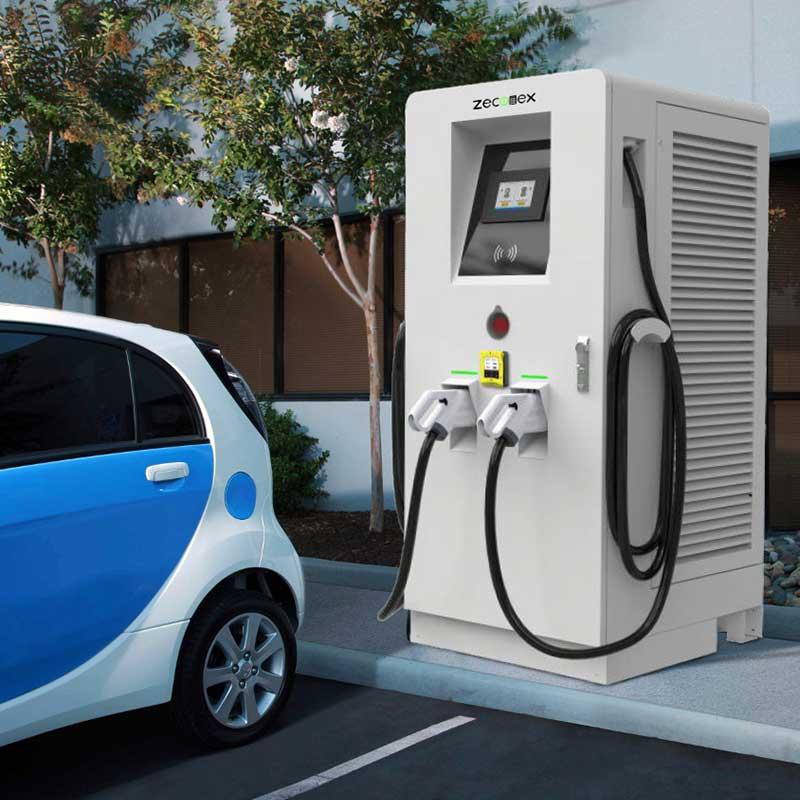
IntroductionThe EV DC fast charger market focuses on high-power charging infrastructure designed to rapidly recharge electric vehicle batteries within a short time span. Unlike conventional AC chargers, DC fast chargers convert electricity externally and deliver direct current straight to the vehicle battery, significantly reducing charging time. These chargers are commonly installed along...
Executive Summary Car Batteries Market: Share, Size & Strategic Insights The global car batteries market size was valued at USD 636.93 million in 2024 and is expected to reach USD 1,170.21 million by 2032, at a CAGR of 7.90% during the forecast period. To make better decisions, generate maximum revenue, and enhance business profit, Car Batteries Market...