Sports Performance at Home: The Futures We’re Quietly Building

Sports Performance at Home used to mean compromise. Limited equipment. Reduced intensity. A temporary substitute until “real” training resumed. That framing is fading. What’s emerging instead is a set of futures where home environments don’t just support performance—they actively shape it.
This isn’t one path forward. It’s several plausible scenarios, each driven by technology, culture, and changing ideas about what training needs to look like.
From Improvisation to Designed Environments
The first shift is architectural, not athletic. Homes are being reimagined as performance spaces rather than living spaces with workouts squeezed in.
In this future, Sports Performance at Home benefits from intentional design: adaptable rooms, modular equipment, and lighting or surfaces that support movement quality. Training stops feeling improvised and starts feeling planned.
Design reduces friction.
Friction limits consistency.
As homes evolve, the gap between “home” and “facility” narrows—not through replication, but through purpose-built simplicity.
Performance Planning Becomes Personal Infrastructure
Training plans have often lived on paper, apps, or memory. The next phase embeds planning into daily life.
Tools centered on workout routine planning are likely to become contextual rather than prescriptive. Instead of static schedules, plans will adapt to sleep, stress, and time availability in real ways.
This reframes performance as rhythm rather than routine. The question won’t be “Did you finish the session?” but “Did today’s training fit today’s capacity?”
That’s a cultural change as much as a technical one.
Remote Coaching Shifts From Instruction to Interpretation
As Sports Performance at Home matures, remote coaching is likely to move beyond cueing and correction.
Future coaches may act more like interpreters—helping athletes understand patterns across weeks, not just movements in a session. Feedback loops stretch longer. Conversations deepen.
This model values continuity over intensity. It assumes performance is built across cycles, not moments.
Distance doesn’t reduce influence.
It changes its shape.
Measurement Without Obsession
Performance tracking is already common at home. The next step is restraint.
Instead of chasing constant metrics, future systems may emphasize trend recognition and signal detection. Fewer numbers. More meaning.
Sports Performance at Home benefits when measurement supports reflection rather than competition with yourself. Overexposure to metrics can flatten motivation; selective exposure can sharpen it.
The winning systems won’t measure everything.
They’ll measure the right things.
Talent Development Starts Earlier—and Closer to Home
One of the most consequential scenarios involves youth and developmental pathways. As home-based performance tools improve, early-stage development may decentralize.
Scouting and evaluation models—often discussed in contexts like baseballamerica—already show signs of valuing longitudinal development over isolated showcases. Home environments allow that development to be captured over time rather than displayed in bursts.
This could reduce access barriers while raising new questions about oversight, equity, and support.
Where performance happens shapes who gets seen.
Culture Shifts From Intensity to Sustainability
Perhaps the biggest future change is cultural. Sports Performance at Home aligns naturally with sustainability: fewer commutes, flexible scheduling, and training that fits real life.
That alignment may slowly redefine what commitment looks like. Less grind. More longevity. Less spectacle. More continuity.
Not everyone will welcome this shift. Some identities are built on hardship. But performance doesn’t require suffering to be meaningful.
It requires intention.
What This Means Right Now
These futures aren’t distant. Pieces of them already exist in fragmented form.
A practical next step is to treat your home training space as an evolving system. Notice what supports consistency and what creates friction. Adjust one variable—not everything.
Sports Performance at Home isn’t about doing more in less space. It’s about designing environments that let performance grow quietly, steadily, and on your own terms.
Categorie
Leggi tutto
The Recycled Waste Management Market Share is witnessing substantial growth as environmental concerns, regulatory policies, and the global push for sustainability drive the adoption of advanced waste recycling technologies. Recycled waste management involves collecting, processing, and repurposing waste materials, reducing landfill dependency, conserving natural resources, and minimizing...

The Houston Texans will host the Detroit Lions within just a matchup of the AFC South and NFC North Office leaders. 2 playoff hopefuls sq. off upon Sunday Night time Soccer in just Houston. The repercussions" of this video game within the superior plan of the period are all with regards to trying to keep the add. Houston contains a 2 match add from the the AFC South though the Lions are...

The process of Dewatering Of Sludge lies at the heart of modern environmental management. It represents far more than a technical operation; it embodies the pursuit of cleaner systems, optimized energy use, and responsible resource recovery. Across industries—from municipal treatment plants to industrial manufacturing sites—this process ensures that what once seemed like waste...

Executive Summary Curative Therapies Market Market Size and Share Analysis Report CAGR Value Global curative therapies market is expected to gain market growth in the forecast period of 2021 to 2028. Data Bridge Market Research analyses the market to account to grow at a CAGR of 8.00% in the above mentioned forecast period. With the use of few steps or the combination of several...
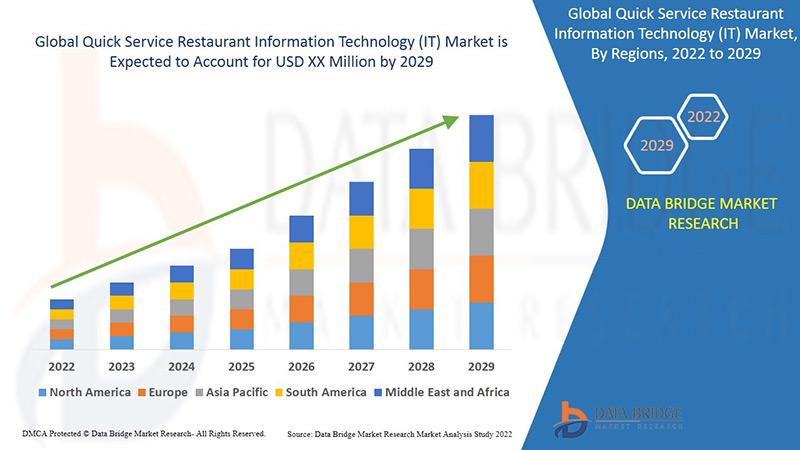
"Executive Summary Quick Service Restaurant Information Technology IT Market Trends: Share, Size, and Future Forecast CAGR Value Data Bridge Market Research analyses that the quick service restaurant information technology (IT) market will exhibit a CAGR of 5.10% for the forecast period of 2022-2029. The Quick Service Restaurant Information Technology IT Market report...