The Essential Role of the Global Privileged Access Management Solutions Industry

In the intricate landscape of modern cybersecurity, no assets are more critical, or more targeted, than privileged accounts. These "keys to the kingdom"—including administrator, root, and service accounts—provide unfettered access to an organization's most sensitive data and critical infrastructure. The compromise of a single privileged credential can be a catastrophic, extinction-level event, enabling attackers to move laterally, escalate privileges, and execute devastating data breaches or ransomware attacks. In this high-stakes environment, the critical role of the Privileged Access Management Solutions industry has never been more pronounced. Privileged Access Management (PAM) is a comprehensive cybersecurity strategy and toolset focused on securing, controlling, and monitoring all access to an organization's privileged accounts and credentials. It operates on the core principle of least privilege, ensuring that every user—human or machine—has only the minimum level of access required to perform their specific role or function. By enforcing granular control and providing a detailed audit trail for all privileged activity, PAM solutions serve as a crucial defense-in-depth layer, dramatically reducing the attack surface and mitigating the risk of both external attacks and insider threats.
The scope of the problem that PAM addresses has expanded exponentially with the complexity of modern IT environments. In the past, privileged access was confined to a small number of human system administrators managing on-premise servers. Today, the concept of "privilege" is far more diffuse and challenging to manage. The mass migration to multi-cloud environments, the rise of DevOps and CI/CD pipelines, and the proliferation of IoT devices have led to an explosion of non-human privileged identities. Service accounts, application credentials, API keys, SSH keys, and secrets embedded in code now far outnumber human privileged users, creating a massive and often poorly managed attack surface known as "privilege sprawl." Each of these identities represents a potential entry point for an attacker. This complexity is compounded by stringent regulatory compliance mandates like GDPR, SOX, and HIPAA, which require organizations to demonstrate strict controls and auditable proof of who is accessing sensitive data, making a robust PAM program not just a security best practice but a legal and financial necessity.
A comprehensive PAM strategy is built upon several core technological pillars that work in concert to establish control. The first and most foundational pillar is Privileged Credential Management, often centered around a highly secure, encrypted "vault." This vault securely stores and manages passwords, SSH keys, and other secrets, eliminating the dangerous practice of hardcoding them in scripts or sharing them insecurely. It automates the rotation of these credentials, enforcing strong complexity policies and ensuring that even if a password is compromised, its lifespan is extremely limited. The second pillar is Privileged Session Management, which provides deep visibility and control over what privileged users are doing. This involves isolating, monitoring, and recording all privileged sessions in real-time. This capability not only acts as a deterrent to malicious activity but also provides an invaluable, irrefutable forensic record for incident response and compliance audits, allowing security teams to see exactly what commands were run or what actions were taken during a session.
The third and most strategic pillar is the enforcement of Least Privilege and Just-in-Time (JIT) Access. The principle of least privilege dictates that users should only be granted the minimum permissions necessary to do their jobs. A robust PAM solution enforces this by default, removing standing, always-on administrative rights. Instead of giving a user permanent admin access, a PAM solution can enable Just-in-Time (JIT) access, where elevated privileges are granted temporarily—for a specific task and a limited duration—and then automatically revoked. This dramatically shrinks the attack surface by ensuring that powerful credentials do not exist when they are not actively and legitimately being used. This approach, often combined with privileged task automation, allows organizations to achieve a state of "zero standing privilege," which is a cornerstone of modern cybersecurity frameworks like Zero Trust and a critical defense against the lateral movement techniques favored by sophisticated attackers. PAM is thus not just a vault, but a complete control plane for all privileged activity.
Explore More Like This in Our Regional Reports:
Categorias
Leia Mais
As per Market Research Future, the EV Battery Reuse Industry is witnessing unprecedented growth, driven by the surging adoption of electric vehicles (EVs) and the increasing focus on sustainable energy solutions. With the rapid expansion of the EV market worldwide, concerns regarding the environmental impact of discarded lithium-ion batteries have intensified. This has catalyzed interest in...

Global Executive Summary Infant Formula Ingredients Market: Size, Share, and Forecast The global infant formula ingredients market size was valued at USD 44.57 billion in 2024 and is expected to reach USD 63.49 billion by 2032, at a CAGR of 4.52 % during the forecast period While preparing the first class Infant Formula Ingredients Market report, all the...
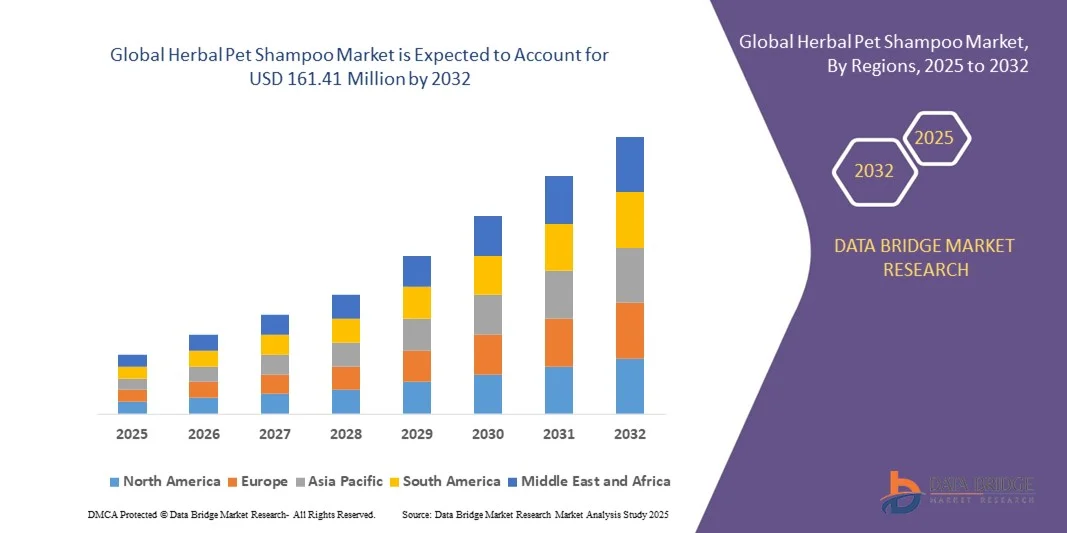
"Executive Summary Herbal Pet Shampoo Market Size and Share: Global Industry Snapshot CAGR Value The global herbal pet shampoo market size was valued at USD 110.92 million in 2024 and is expected to reach USD 161.41 million by 2032, at a CAGR of 4.80% during the forecast period Businesses can depend with confidence upon this superior Herbal Pet...
Competitive Analysis of Executive Summary Asia-Pacific Drug Safety Solutions and Pharmacovigilance Market Market Size and Share The Asia-Pacific drug safety solutions and pharmacovigilance market size was valued at USD 1.42 billion in 2024 and is expected to reach USD 2.65 billion by 2032, at a CAGR of 8.10% during the forecast period. Global...
The latest business intelligence report released by Polaris Market Research on Pressure Transmitter Market Size, Share, & Industry Analysis Report: By Fluid Type (Liquid, Gas, and Steam), By Measurement Application, By Type, By End-Use, and By Region – Market Forecast, 2025–2034. It covers the in-depth knowledge of the Pressure Transmitter Market Share that...