The Future of Separation Science: Exploring the 2D Chromatography Market
The Future of Analytical Precision: Exploring the Global 2D Chromatography Market
The world of analytical chemistry is undergoing a significant transformation, driven by the need for higher resolution and deeper insights into complex samples. At the forefront of this evolution is the 2D Chromatography Market, a sector dedicated to providing advanced separation techniques that go far beyond the capabilities of traditional one-dimensional systems.
What is 2D Chromatography?
Unlike standard chromatography, which uses a single column to separate mixtures, two-dimensional (2D) chromatography couples two different separation stages. This "orthogonality" allows scientists to separate components that might otherwise overlap, making it an essential tool for analyzing intricate substances like proteomes, polymers, and environmental pollutants.
Key Drivers of Growth
The global expansion of this market is fueled by several critical factors:
- Biopharmaceutical Advancements: The rise of biologics and biosimilars requires rigorous characterization. 2D chromatography provides the "fingerprinting" necessary to ensure drug safety and efficacy.
- Omics Research: In fields like proteomics and metabolomics, researchers deal with thousands of molecules simultaneously. The high peak capacity of 2D systems is the only way to achieve clear results.
- Food Safety & Environmental Testing: As regulations tighten, the ability to detect trace contaminants in complex food matrices or soil samples has become a top priority.
As technology continues to advance, we are seeing more "plug-and-play" 2D systems entering the laboratory, making this once-complex technique accessible to a broader range of industries.
Precision and Innovation: A Deep Dive into the US 2D Chromatography Market
In the global landscape of scientific research, North America remains a powerhouse, with the US 2D Chromatography Market leading the charge in adoption and technological integration.
Why the US is Leading the Way
The United States holds a dominant position in the chromatography sector for several reasons:
- Robust R&D Infrastructure: The presence of world-class academic institutions and massive pharmaceutical hubs (such as those in Boston and San Francisco) creates a constant demand for high-end analytical instrumentation.
- Strict Regulatory Standards: With the FDA maintaining some of the world's most stringent requirements for drug validation, US-based labs are incentivized to invest in the highest resolution equipment available to avoid impurities.
- Technological Early Adopters: US laboratories are often the first to integrate AI and automation with 2D chromatography, streamlining workflows and reducing human error.
Market Applications
In the US, the application of 2D chromatography is particularly prevalent in clinical diagnostics and petrochemical analysis. By utilizing two dimensions of separation, clinical labs can better identify biomarkers for diseases, while the energy sector uses it to break down complex hydrocarbon structures.
The Road Ahead
The focus in the US is shifting toward "Green Chromatography"—minimizing solvent waste while maintaining the high-performance standards the industry expects. As sustainability becomes a core corporate goal, the development of efficient 2D systems will continue to be a primary focus for manufacturers across the country.
Categorias
Leia mais
Introduction The US Car Bumpers Market is evolving rapidly as automotive safety standards, lightweight materials, and design innovation reshape the way bumpers are developed and integrated into modern vehicles. Once seen as simple protective components, bumpers have become essential to vehicle performance, pedestrian safety, and aerodynamics. The growing adoption of advanced materials such as...

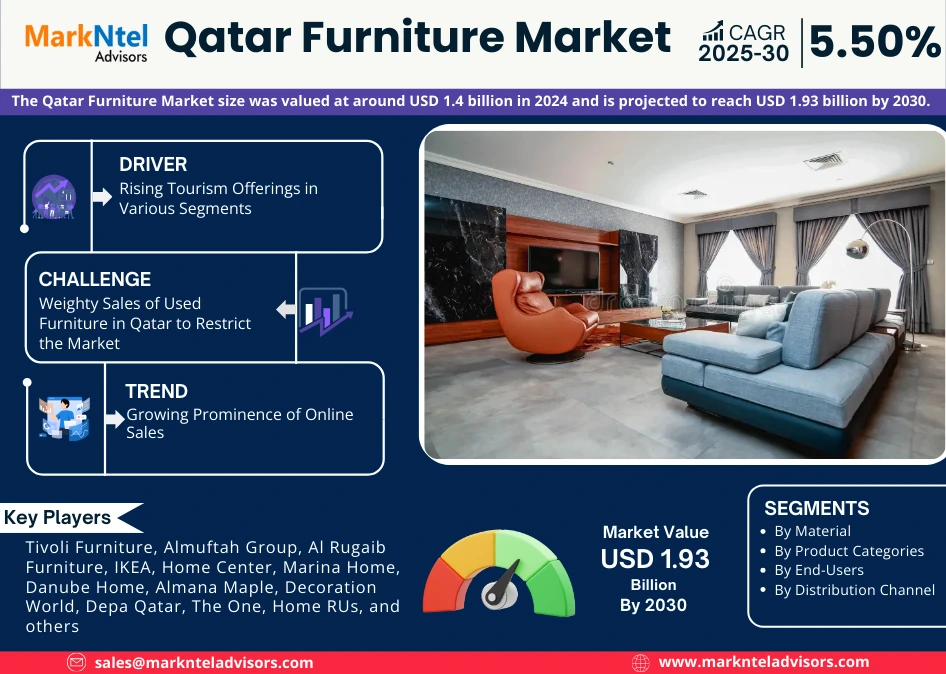
As per MarkNtel Advisors The Qatar Furniture Market size was valued at around USD 1.4 billion in 2024 and is projected to reach USD 1.93 billion by 2030. Along with this, the market is estimated to grow at a CAGR of around 5.50% during the forecast period, i.e., 2025-30. Qatar Furniture Market Systems Market Outlook: The Russian Seed Market is rapidly evolving, driven by agricultural...
According to a new report published by Introspective Market Research, titled, “Automotive Logistics Market by Service Type, Logistics Model, and Application,” The Global Automotive Logistics Market Size Was Valued at USD 298.21 Billion in 2023 and is Projected to Reach USD 574.14 Billion by 2032, Growing at a CAGR of 7.55%. Introduction / Market Overview The...
Introduction The Europe Yerba Mate Market has witnessed significant growth in recent years, driven by rising health consciousness and the growing popularity of functional beverages. Yerba mate, a traditional South American herbal tea, is valued for its antioxidant properties, natural caffeine content, and numerous health benefits. It is consumed widely for its energy-boosting and...

Future of Executive Summary Acitretin Market: Size and Share Dynamics The global acitretin market size was valued at USD 34.86 billion in 2024 and is expected to reach USD 81.50 billion by 2032, at a CAGR of 11.20% during the forecast period. Acitretin Market research report is a sure solution to get market insights with which business can visualize market...