How to Improve Accuracy with a Low Temperature Liquid Flow Meter?
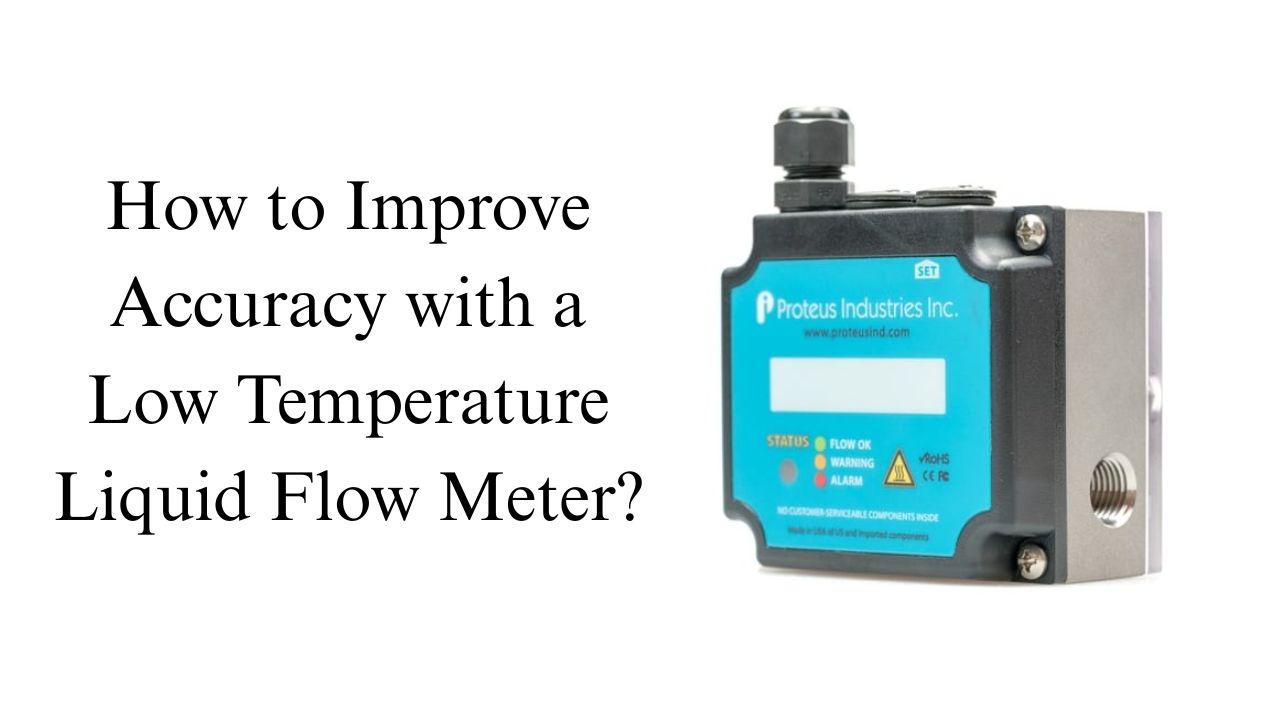
Measuring liquid flow at low temperatures presents unique challenges that can significantly impact measurement accuracy. Whether you're working with cryogenic liquids, refrigerated fluids, or cold-process streams, achieving precise readings with a low temperature liquid flow meter requires careful consideration of multiple factors. Understanding these variables and implementing proper strategies can dramatically improve your measurement accuracy and operational efficiency.
Understanding Low Temperature Flow Measurement Challenges
Low-temperature environments introduce several complications that don't occur in standard-temperature applications. Fluid properties such as viscosity, density, and vapour pressure change significantly as temperature drops. These variations directly affect flow meter performance, making it essential to account for these shifts when selecting and configuring your measurement system.
Thermal contraction of both the fluid and the meter components can alter calibration parameters. Additionally, ice formation, condensation, and thermal stratification can interfere with sensor performance. Recognising these challenges is the first step toward implementing solutions that maintain measurement accuracy across your operating range.
Select the Right Flow Meter Technology
Not all flow meter technologies perform equally well at low temperatures. Magnetic flow meters, Coriolis meters, and certain ultrasonic meters are generally well-suited for low-temperature applications due to their minimal moving parts and robust construction. When choosing a low-temperature liquid flow meter, verify that the manufacturer has specifically designed and tested the unit for your operating temperature range.
Consider the fluid properties at your operating temperature. Some technologies are more sensitive to changes in viscosity than others. For instance, turbine meters can experience bearing issues at low temperatures, while Coriolis meters maintain excellent accuracy across wide temperature ranges because they measure mass flow directly.
Implement Proper Installation Practices
Installation quality significantly impacts measurement accuracy. Ensure adequate straight pipe runs upstream and downstream of the meter, per manufacturer specifications. This becomes even more critical at low temperatures, where fluid turbulence and swirl patterns can be amplified.
Pay special attention to pipe insulation and thermal management. Temperature gradients along the meter body can create measurement errors. Insulate piping consistently, including the meter section, to maintain uniform temperatures. However, ensure that insulation doesn't interfere with the meter's electronics or make maintenance access difficult.
Mount the meter in an orientation that prevents vapour pockets or gas accumulation, which are more likely to form when handling cold liquids near their boiling points. Proper venting provisions should be included in your piping design to prevent the accumulation of trapped gases that could compromise accuracy.
Calibrate for Actual Operating Conditions
Standard factory calibrations typically occur at ambient temperatures. For optimal accuracy with a low-temperature liquid flow meter, request calibration at temperatures close to your actual operating conditions. While this may increase initial costs, the improvement in measurement accuracy often justifies the investment, particularly for critical applications.
If on-site calibration at operating temperature isn't feasible, apply the manufacturer's temperature compensation factors. Modern flow meters often include built-in temperature sensors and automatic compensation algorithms that adjust readings based on real-time temperature measurements.
Establish a regular recalibration schedule. Low-temperature cycling can gradually degrade meter performance, making periodic verification essential to maintain accuracy.
Monitor and Compensate for Temperature Variations
Even in controlled processes, temperature fluctuations occur. Installing precision temperature sensors at or near the flow meter location enables real-time compensation for temperature-induced measurement errors. Many modern flow computers can automatically apply correction factors based on temperature inputs.
For applications involving multiple temperature zones, consider installing temperature sensors at several points to detect thermal stratification. This condition, in which different layers of fluid flow at different temperatures, can cause significant measurement errors if not properly addressed.
Maintain Proper Material Selection
Materials used in flow meter construction must withstand thermal stresses associated with low-temperature operation. Stainless steel alloys, certain polymers, and specialised sealing materials are commonly specified for low-temperature applications. Please verify that all wetted components, including gaskets and O-rings, maintain their integrity and flexibility at your operating temperature.
Thermal expansion coefficients matter. When connecting meters to piping systems, ensure that differential thermal contraction won't create mechanical stresses that could affect meter geometry and accuracy.
Address Condensation and Moisture Issues
Electronics and signal processing components can be compromised by condensation forming on cold surfaces. Select meters with properly sealed electronics enclosures rated for your environment. Consider heated enclosures or purge systems in applications where condensation is problematic.
Ensure that transmitter housings and junction boxes are positioned away from the coldest surfaces and include appropriate environmental protection ratings.
Implement Data Validation and Diagnostics
Modern flow meters include diagnostic capabilities that monitor measurement quality indicators. Utilise these features to detect developing problems before they significantly impact accuracy. Parameters such as signal strength, sensor performance metrics, and temperature stability can provide early warnings of potential issues.
Establish baseline performance data during commissioning and regularly compare current performance against these benchmarks. Sudden changes in these patterns often indicate problems requiring attention.
Conclusion
Improving the accuracy of a low-temperature liquid flow meter requires a comprehensive approach encompassing proper technology selection, careful installation, appropriate calibration methods, and ongoing maintenance practices. By addressing the unique challenges of low temperature measurement and implementing these strategies, you can achieve reliable, accurate flow measurement that supports optimal process control and operational efficiency. The investment in proper implementation pays dividends through improved product quality, reduced waste, and enhanced process understanding.
Категории
Больше
Executive Summary Fire Protection System Market: Growth Trends and Share Breakdown The global fire protection system market size was valued at USD 81.22 billion in 2024 and is projected to reach USD 150.11 billion by 2032, with a CAGR of 7.98% during the forecast period of 2025 to 2032. The Fire Protection System Market report has been formed with the appropriate expertise's that utilize...

"Executive Summary Recovered Carbon Black (rCB) Market: Growth Trends and Share Breakdown The global recovered carbon black (rCB) market size was valued at USD 243.10 million in 2024 and is expected to reach USD 1453.69 million by 2032, at a CAGR of 25.05% during the forecast period The Recovered Carbon Black (rCB) Market report has been formed with...
The Gel Permeation Chromatography Market region dynamics are highly segmented, reflecting significant disparities in R&D expenditure, the concentration of the chemical and pharmaceutical industries, and the stringency of quality control standards. North America and Europe currently dominate the market, primarily due to their large installed base of high-end analytical equipment,...
Resumen ejecutivo global del mercado de bebidas funcionales : tamaño, participación y pronóstico Se espera que el mercado de bebidas funcionales experimente un crecimiento del mercado a una tasa del 7,3% en el período de pronósticos de 2022 a 2029. Para obtener información valiosa del mercado y prosperar en este competitivo mercado, el informe...
The Utility Scale PV Inverter Industry is rapidly expanding as large-scale solar installations continue to play a central role in global energy transitions. As Per Market Research Future, rising investments in renewable energy, supportive government policies, and increasing demand for grid-stable solar power are fueling the importance of high-capacity PV inverters designed for utility-level...