How Digital Units Changed the Driving Experience
Introduction
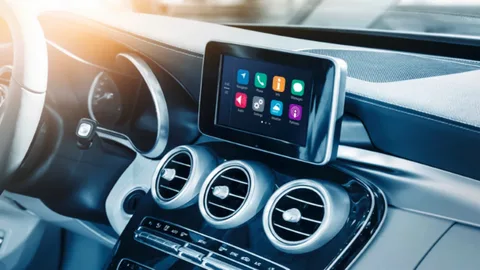
The automotive display unit market focuses on visual interfaces used across vehicle interiors to present information, controls, and entertainment to drivers and passengers. These display units include instrument cluster screens, infotainment displays, head-up displays, rear-seat entertainment screens, and integrated cockpit panels. Automotive display units have evolved from simple monochrome panels to high-resolution, multi-touch, and curved screens that enhance usability and aesthetics. As vehicles become more connected, software-driven, and user-centric, display units are now central to the driving experience, shaping how users interact with navigation, safety systems, and vehicle settings.
Market Drivers
The market is driven by rising consumer demand for advanced in-cabin technology and connected features. Automakers are increasingly replacing analog gauges and physical buttons with digital displays to offer flexible layouts and personalized interfaces. Growth in infotainment systems, smartphone integration, and connected services directly boosts demand for display units. Electric vehicles are a major driver, as they rely heavily on screens to communicate battery status, range, charging, and driving modes. Advances in display technologies such as LCD, OLED, and AMOLED improve brightness, clarity, and responsiveness, making display units a key differentiator across vehicle segments.
Market Challenges
Despite strong growth, the market faces challenges related to cost, driver distraction, and system integration. Large, high-resolution displays increase vehicle cost, especially in mass-market segments. Poor interface design can distract drivers and raise safety concerns, requiring careful human–machine interface development. Display units must withstand vibration, temperature variation, and long operating hours without degradation. Software compatibility, cybersecurity, and long-term update support add further complexity. Managing glare, fingerprints, and visibility in bright sunlight remains an ongoing technical challenge for manufacturers.
Market Opportunities
The market offers strong opportunities through innovation in display form factors and interaction methods. Curved, panoramic, and pillar-to-pillar displays are gaining popularity in premium and electric vehicles. Integration of voice control, haptic feedback, and gesture recognition improves usability while reducing distraction. Over-the-air software updates allow continuous improvement of display features and layouts. Growing demand for personalized digital cockpits creates opportunities for software-driven customization. Emerging markets with rising demand for feature-rich vehicles and aftermarket display upgrades present additional growth potential.
Regional Insights
Regional demand varies based on vehicle production, technology adoption, and consumer preferences. Asia-Pacific dominates the market due to high vehicle manufacturing volumes and strong demand for digital features in China, Japan, South Korea, and India. Europe shows steady growth driven by premium vehicle production and focus on advanced cockpit design. North America remains a significant market supported by consumer preference for large screens and advanced infotainment systems. The Middle East shows growing adoption in luxury vehicles, while Latin America is gradually expanding as vehicle digitalization increases.
Future Outlook
The future of the automotive display unit market will be shaped by software-defined vehicles and deeper digital integration. Displays will become more adaptive, offering context-aware information based on driving conditions and user behavior. OLED, microLED, and transparent display technologies may further enhance design flexibility and energy efficiency. As autonomous and semi-autonomous driving features expand, displays will play a greater role in information sharing and entertainment. Continuous innovation in display technology and interface design will sustain long-term market growth.
Conclusion
The automotive display unit market is transforming vehicle interiors by becoming the primary interface between users and vehicle systems. While challenges related to cost, distraction, and system complexity exist, rapid advancements in display and software technologies continue to drive adoption. As vehicles move toward connected, electric, and autonomous platforms, display units will remain essential to delivering intuitive, safe, and engaging driving experiences.
Κατηγορίες
Διαβάζω περισσότερα
Mental Health Market Trends: The Rise of Virtual and Preventive Mental Care Key Mental Health Market Trends include increased adoption of virtual therapy, scalable AI emotional support, and community-based mental health prevention programs. The Mental Health Market highlights how self-guided apps and remote counseling are gaining traction, particularly among younger, tech-savvy demographics. At...

Executive Summary Industrial Gases Market: Share, Size & Strategic Insights The industrial gases market is expected to witness market growth at a rate of 5.95% in the forecast period of 2022 to 2029. Industrial Gases Market report is structured with the best and advanced tools of collecting, recording, estimating and analysing market data. The insights made available in this market...

Executive Summary Data Center Cooling Market Size and Share: Global Industry Snapshot The global data center cooling market size was valued at USD 21.58 billion in 2024 and is expected to reach USD 76.30 billion by 2032, at a CAGR of 17.10% during the forecast period. For an actionable market insight and lucrative business strategies, a faultless market...
The latest business intelligence report released by Polaris Market Research on Hospital Logistics Robots Market Share, Size, Trends, Industry Analysis Report, By Type (Autonomous Guided Vehicle, Mobile Robot Platforms); By Application; By Region; Segment Forecast, 2024 - 2032. It covers the in-depth knowledge of the Hospital Logistics Robots Market Share that includes...

According to the research report, the global cotton candy machines market was valued at USD 105.34 billion in 2022 and is expected to reach USD 159.04 billion by 2032, to grow at a CAGR of 4.37% during the forecast period. The global cotton candy machines market is experiencing steady growth as the demand for convenient, entertaining, and high-margin confectionery equipment increases...